Small desiccant dehumidifier (250W)
0.25 kWh × 27p = 6.75p per hour
8 hours/day: 54p
Per month (8h/day): £16.20
UK running costs guide
Dehumidifier running costs range from around 4p to 17p per hour in the UK, depending on the model, its wattage and your electricity tariff. Here is what determines the cost and how to work it out for your specific situation.
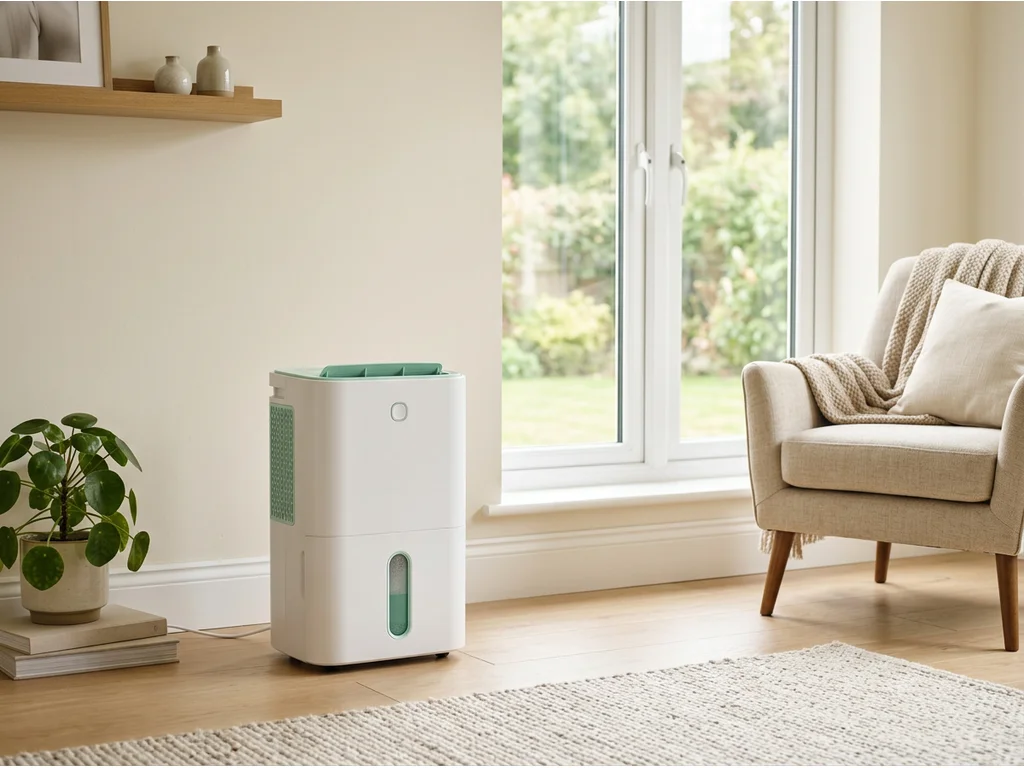
UK guide
Running a dehumidifier for 8 hours a day costs between 32p and £1.36 — less than a bar heater, and far less than a tumble dryer.
Under the April 2026 UK energy price cap, a typical UK household pays approximately 24p–34p per kWh including VAT. On this rate:
0.25 kWh × 27p = 6.75p per hour
8 hours/day: 54p
Per month (8h/day): £16.20
0.45 kWh × 27p = 12.15p per hour
8 hours/day: 97p
Per month (8h/day): £29.10
0.65 kWh × 27p = 17.55p per hour
8 hours/day: £1.40
Per month (8h/day): £42.00
These are approximate ranges using the Ofgem price cap rate for April 2026 (27p/kWh standard tariff, including VAT). If you are on a fixed-rate tariff, your cost per kWh may be lower — check your energy bill.
The running cost formula is straightforward:
Or use our free calculator — enter your dehumidifier's wattage, how many hours you run it, and your tariff rate:
Desiccant dehumidifiers typically draw 250–350W. Compressor dehumidifiers typically draw 300–700W depending on capacity. Choosing the right size for your room matters: a dehumidifier that is too small runs constantly and never switches off, costing more than a correctly sized unit.
The Ofgem price cap for April 2026 is approximately 27p/kWh for standard variable tariffs. If you are on a fixed-rate deal you may pay 20–25p/kWh. Economy 7 or time-of-use tariffs can reduce costs to 10–15p/kWh during off-peak night hours.
Most rooms reach target humidity (50–55%) within 2–4 hours once the dehumidifier is correctly sized. Running it continuously after that wastes energy — a dehumidifier with a humidistat will then cycle on and off automatically to maintain the target level.
A colder room reduces the efficiency of compressor dehumidifiers — the coil needs warmth to evaporate the collected moisture. Desiccant dehumidifiers maintain efficiency in cold rooms (below 15°C), which makes them a better choice for unheated bedrooms or garages in winter.
UK winters create more condensation (cold walls, windows kept closed) so dehumidifiers work harder. Summer humidity is often lower indoors, reducing running time and cost. Autumn and winter are typically when dehumidifiers run most and cost the most.
A room that loses moisture quickly (open windows, draughty doors, extractor fans pulling air out) means the dehumidifier runs longer. Sealing obvious drafts and closing doors when the dehumidifier is running reduces running time and cost.
There are two main types of dehumidifier, and they work differently:
Work like a refrigerator — a compressor pumps refrigerant through a coil to condense moisture from the air. More energy-efficient at moisture removal in warm conditions. Better for: living rooms, kitchens, bathrooms where temperatures are typically above 15–20°C. Typical wattage: 300–700W.
Running cost: 8–17p per hour depending on wattage.
Use a silica gel desiccant wheel to absorb moisture from the air, then heat it to release the moisture into a collection tank. Less efficient in terms of energy per litre of water removed, but maintain effectiveness in cold temperatures. Better for: bedrooms, unheated rooms, garages, boats, caravans. Typical wattage: 250–650W.
Running cost: 5–15p per hour depending on wattage.
For most UK homes with condensation or mould problems, running a dehumidifier daily during winter is effective and the cost is reasonable:
During summer or in well-ventilated homes, you may only need to run the dehumidifier occasionally. A hygrometer (from £10) helps you check whether you need it running.
Enter your model's wattage and your electricity tariff rate to see exact daily, weekly and monthly costs.
Enter your room dimensions and dampness level to find the right capacity dehumidifier. Right-sizing reduces running costs.
If condensation is causing black mould, this step-by-step guide covers safe removal and prevention.