Cold basement (<15C)
Desiccant type, handles low temps
Compare on AmazonUK basement and cellar damp guide
Basements and cellars in UK homes are particularly prone to damp. A dehumidifier sized and chosen for the conditions helps protect the space and keep stored items dry.
Buying guide
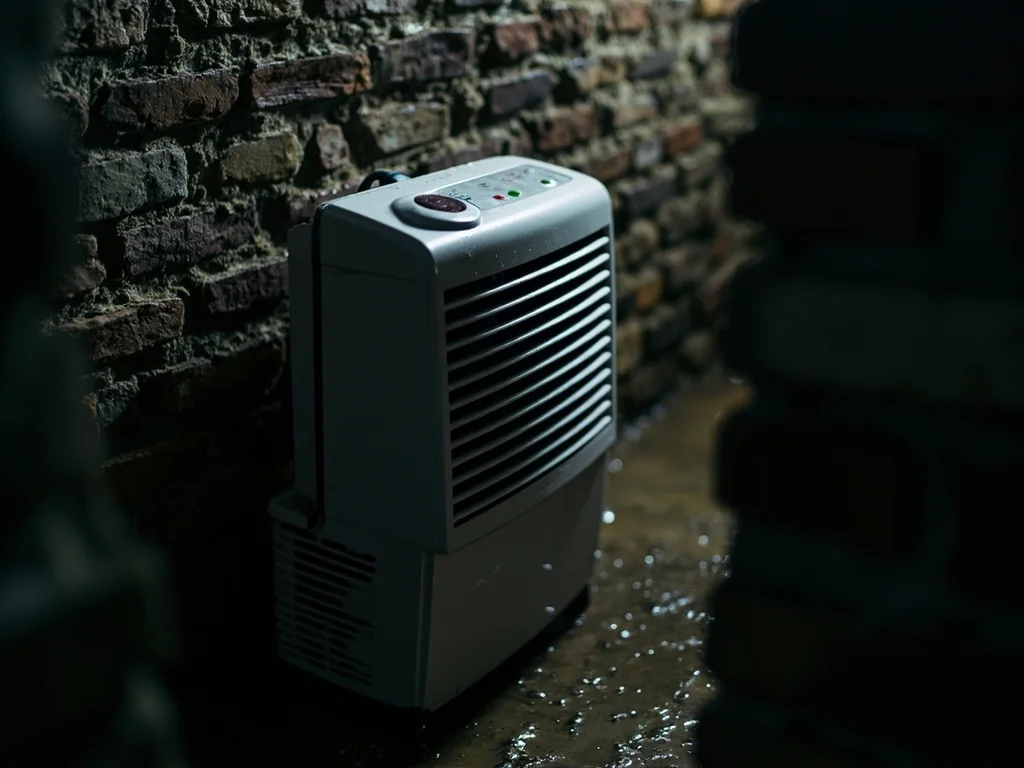
Below-ground spaces stay cold and damp year-round. A desiccant or cold-rated compressor model handles conditions that standard units struggle with.
UK basements and cellars are particularly susceptible to damp for several reasons. Many Victorian and Edwardian properties have cellars built with solid brick walls in direct contact with the ground there is no cavity insulation. The water table in many UK areas sits high, meaning the ground surrounding the basement is permanently damp. Poor or absent ventilation allows that moisture to accumulate rather than dissipate.
Because basements are partly or fully underground, the walls stay cold even in summer, making condensation on surfaces common when warm summer air enters the space. This is why a basement that feels dry in winter can become damp in late summer when warm, humid outside air meets the cold cellar walls.
Before buying a dehumidifier for a basement, confirm that the moisture is coming from condensation and humidity rather than water ingress through the walls or floor. Use a hygrometer to check the relative humidity if it is consistently above 70% in an unventilated basement with no obvious water leaks, a dehumidifier is likely to help.
If you see standing water, active drips, tide marks above the current floor level or crumbling plaster, get professional waterproofing advice first. A dehumidifier can support ongoing moisture control after the structural issue is addressed, but it cannot fix active water ingress.
If you have a persistently damp basement or cellar, work through these steps in order:
Think about three things when choosing a basement dehumidifier: the size of the space, how cold the basement gets, and how you want to manage water collection.
For a cold cellar under a terraced house (typically small, unheated, with stable temperatures around 812C), a compact desiccant unit in the 812 litres-per-day range is usually sufficient. For a larger basement under a detached or semi-detached home, or one with a higher water table creating constant moisture, consider a mid-range to large desiccant unit, 1620 litres/day or more.
If the basement is heated and used as a living space a gym, workshop or office a standard compressor dehumidifier is more energy-efficient for that use case.
Basements are typically cold. Most standard compressor dehumidifiers lose efficiency below about 10C and may stop extracting moisture effectively below 5C. A desiccant unit uses a heated absorbent wheel rather than a compressor, so its performance does not drop as significantly in the cold.
For an unheated storage basement that sits at 515C most of the year, a desiccant dehumidifier is the more reliable choice. For a basement that is actively heated to above 15C and used regularly as a living space, a compressor unit is fine and will be more energy-efficient.
Size the dehumidifier to the floor area and the severity of the moisture problem. A damp cellar needs more extraction capacity than a dry one.
| Basement / Cellar Type | Floor Area | Suggested Capacity | Recommended Type |
|---|---|---|---|
| Small cellar (< 20m) | Under 20m | 812 litres/day | Compact desiccant |
| Medium basement (2050m) | 2050m | 1220 litres/day | Desiccant |
| Large basement (50m+) | 50m and above | 20+ litres/day | Industrial desiccant or multiple units |
| Whole-basement system | Varies | Multiple units or whole-house system | Ducted dehumidifier or paired desiccant units |
Continuous drainage is strongly preferred for basements. A tank-based dehumidifier in a damp cellar can fill within a few hours of running. If you are not there to empty it, the unit stops and humidity rises again wasting energy and letting the space stay damp.
A drain hose plumbed into a waste pipe, a floor drain, or even a simple gravity-fed outlet to outside means the dehumidifier runs indefinitely without attention. Many desiccant units designed for basements and cellars include continuous drainage as standard. When sizing your purchase, check that the unit has this feature it is the most practical choice for a damp below-ground space.
Basement dehumidifiers need to handle cold, damp and enclosed conditions. Operating temperature range, extraction performance in the cold, and drain type matter most.
| Type | Min operating temp | Cold extraction | Drain type | Typical price range |
|---|---|---|---|---|
| Desiccant | -10C and below | Good in cold | Tank or continuous | £180-£400 |
| Low-temp compressor | -5C approximate | Moderate below 10C | Tank usually standard | £150-£300 |
| Industrial desiccant | -15C rated | High in cold | Continuous standard | £400-£900 |
| Standard compressor | 5C minimum | Poor in cold basements | Tank | £100-£250 |
Basements are cooler and damper than upstairs rooms. Pick for your conditions.
Desiccant type, handles low temps
Compare on AmazonCompressor type, 16-20L
Compare on Amazon20L+, continuous drain, high extraction
Compare on AmazonUse the dehumidifier size calculator and running cost calculator before choosing a model.
Type to search all DampHomeFix guides, tools and buying pages.