Tank
Best for portability and occasional use.
UK damp and humidity guide
Most portable dehumidifiers collect water in a tank. Some also let you attach a drain hose so water flows away continuously. Both setups can work well.
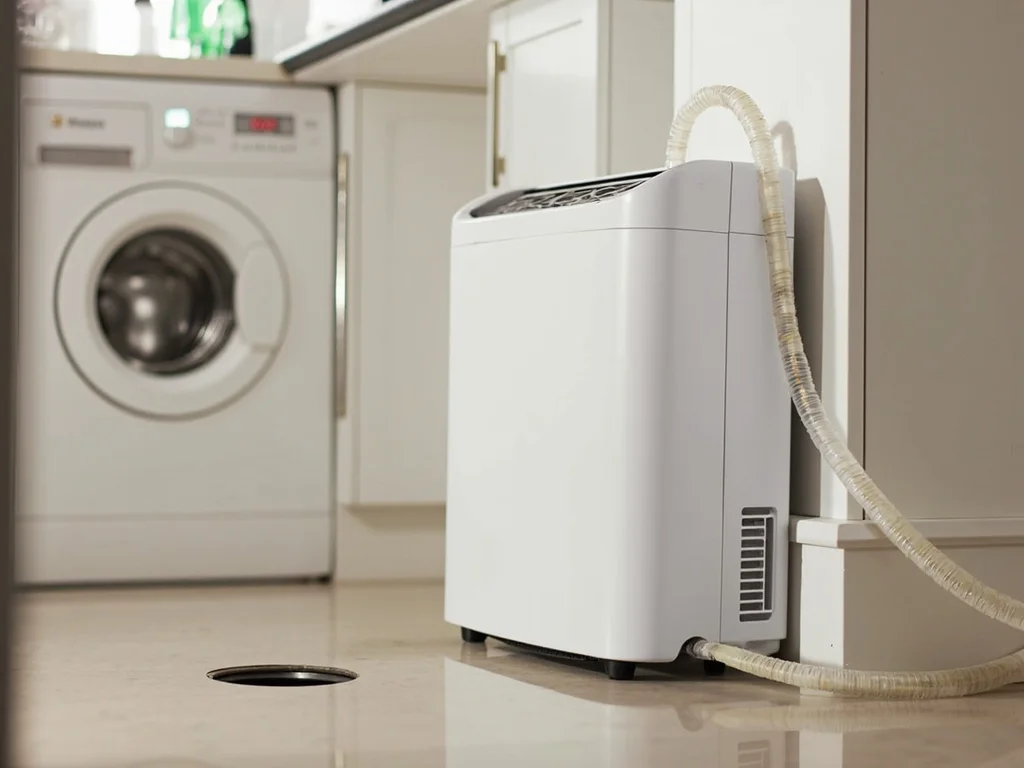
Dehumidifier Drain Hose
A hose can be useful for long-running damp control, but it needs a suitable downhill route unless the model has a pump.
Best for portability and occasional use.
Best for fixed positions and long runs.
Useful where gravity drainage is not possible.
A tank is simple and portable. You can move the dehumidifier between rooms and empty it when full.
The downside is that a damp room or laundry load can fill the tank faster than expected.
Continuous drainage is useful if the unit sits near a suitable drain, sink, waste pipe or floor drain. It can help in garages, utility rooms, basements or long-running damp control.
A drain hose usually needs a downhill route unless the model has a pump. Kinked hoses, blocked outlets or badly positioned units can stop drainage working properly.
Choose tank-only if you want flexibility and occasional use. Choose continuous drainage if the unit will stay in one place, run for long periods, or collect a lot of water.
Compare current products, reviews and availability. We do not display live prices because those change frequently.
Use the size calculator, running cost calculator and damp checklist to compare the problem before spending money.
Type to search all DampHomeFix guides, tools and buying pages.