Safe placement
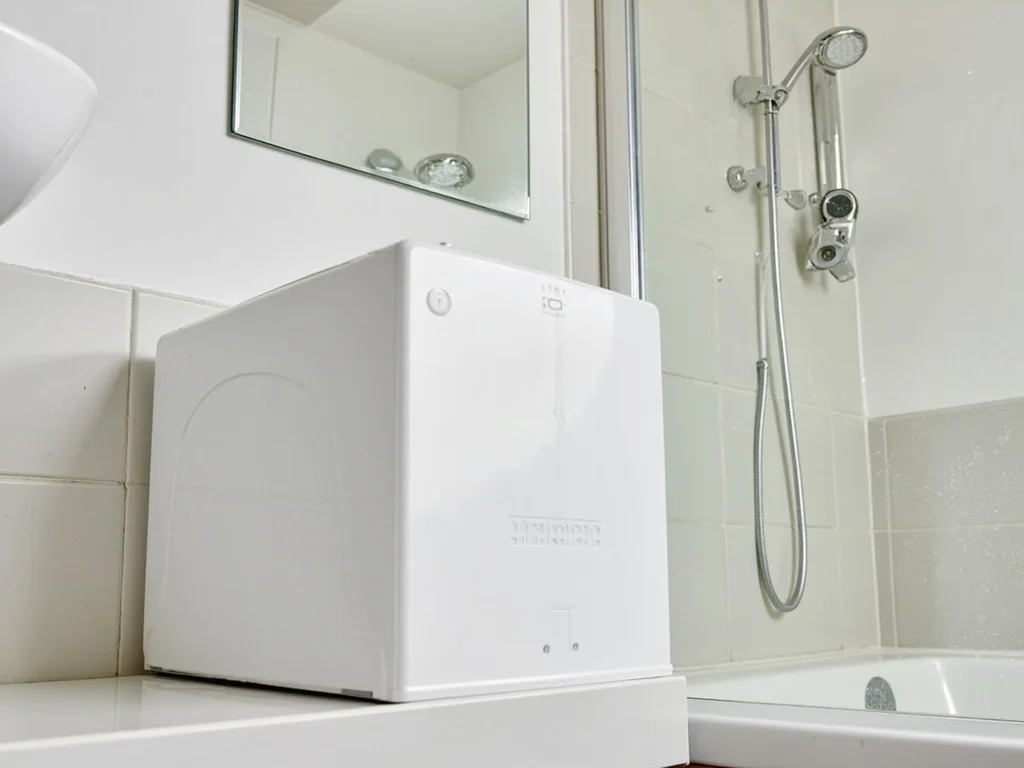
Check the manual and avoid placing standard appliances where they can be splashed.
UK dehumidifier buying guide
Bathrooms create short, heavy humidity spikes. If there is no extractor fan, focus on safe placement, ventilation habits and drying the nearby air after showers.
Buying guide
A dehumidifier can help nearby spaces, but bathroom safety and ventilation come first.
Electrical appliances and wet bathroom zones need care. Many households place a dehumidifier outside the bathroom door after showers rather than inside a wet room. Always follow the product manual and avoid unsafe wet-zone use.
If you rent or cannot install an extractor fan, consistent window opening, wiping wet surfaces and running a nearby dehumidifier can reduce lingering humidity. For persistent mould, clean it safely and reduce the moisture source.
Check the manual and avoid placing standard appliances where they can be splashed.
Run ventilation first, then use a nearby dehumidifier to pull moisture from the air.
Clean visible mould, but expect it to return if humidity remains high after showers.
| Need | Look for | Watch out for |
|---|---|---|
| No extractor fan | Window ventilation, nearby dehumidifier, humidity meter | Using an appliance unsafely in a wet splash zone |
| Mould around ceiling or grout | Mould remover plus humidity reduction | Only cleaning and ignoring the moisture source |
| Small bathroom | Compact unit outside the door, easy tank emptying | Oversized unit with poor placement |
Use these broad searches to compare current products, reviews and availability. We do not show live prices because they change frequently.
Only if the product manual and placement are safe. Many standard units are better used just outside the bathroom after showers.
Use windows where possible, wipe wet surfaces, keep the door open after showers if suitable, and consider a nearby dehumidifier for lingering humidity.
Bathroom dehumidifiers | Mould remover vs dehumidifier | Damp problem selector | Ideal humidity level
Type to search all DampHomeFix guides, tools and buying pages.