Cleaner
Treats visible staining and surface mould.
UK damp and humidity guide
Mould remover and dehumidifiers solve different parts of the same problem. One cleans visible mould; the other helps control the damp air that lets mould return.
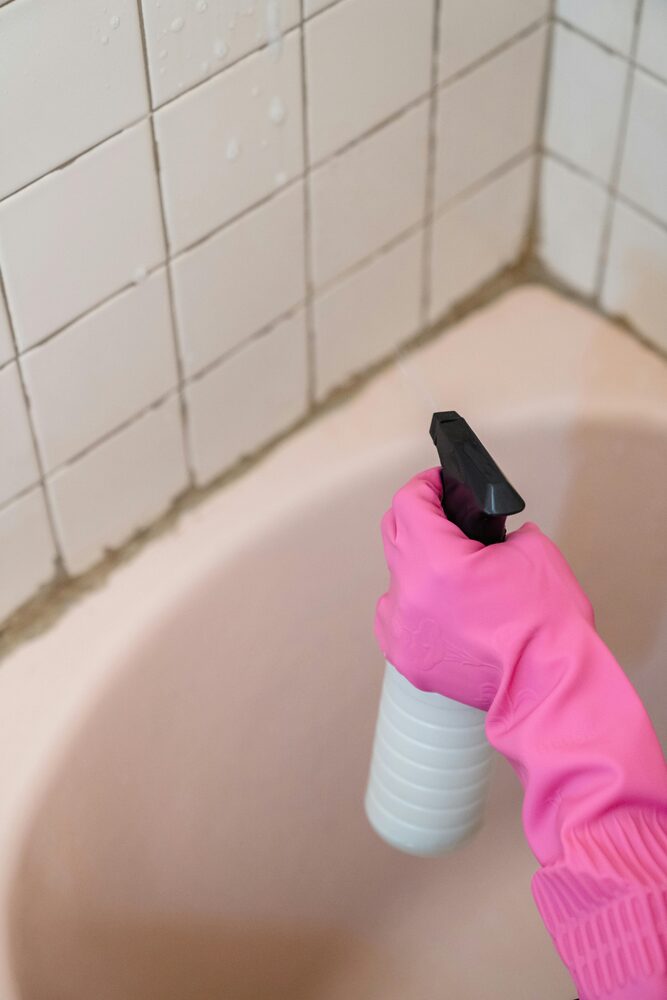
Mould Remover Bathroom
Removing visible mould is only step one. The room also needs lower humidity and better airflow.
Treats visible staining and surface mould.
Reduces airborne moisture where humidity is the cause.
Leaks and failed seals need fixing at source.
Mould remover sprays treat visible mould and mildew on surfaces such as bathroom grout, silicone, tiles, ceilings, window frames and painted areas.
Many products are bleach-based, so they can smell strong and need careful ventilation.
A dehumidifier removes moisture from the air. It can help reduce condensation, musty smells and mould risk where the main cause is high indoor humidity.
Mould often returns because the underlying condition is still there: high humidity, cold surfaces, poor ventilation, leaks or furniture blocking airflow.
Always follow the product label. Ventilate the room, wear gloves where recommended, avoid mixing chemicals, and protect clothing and soft furnishings.
Damp patches after rain, crumbling plaster or persistent wet walls need proper investigation. A dehumidifier and spray may only hide symptoms.
Compare current products, reviews and availability. We do not display live prices because those change frequently.
Use the size calculator, running cost calculator and damp checklist to compare the problem before spending money.
Type to search all DampHomeFix guides, tools and buying pages.