Condensation
Caravans cool down quickly and moisture from cooking, showering and breathing condenses on cold surfaces. This is the most common damp cause in touring and static units.
UK static and touring caravan guide
Static and touring caravans are prone to condensation and damp between uses. A dehumidifier sized for the space helps protect the interior from mould and moisture damage.
UK guide
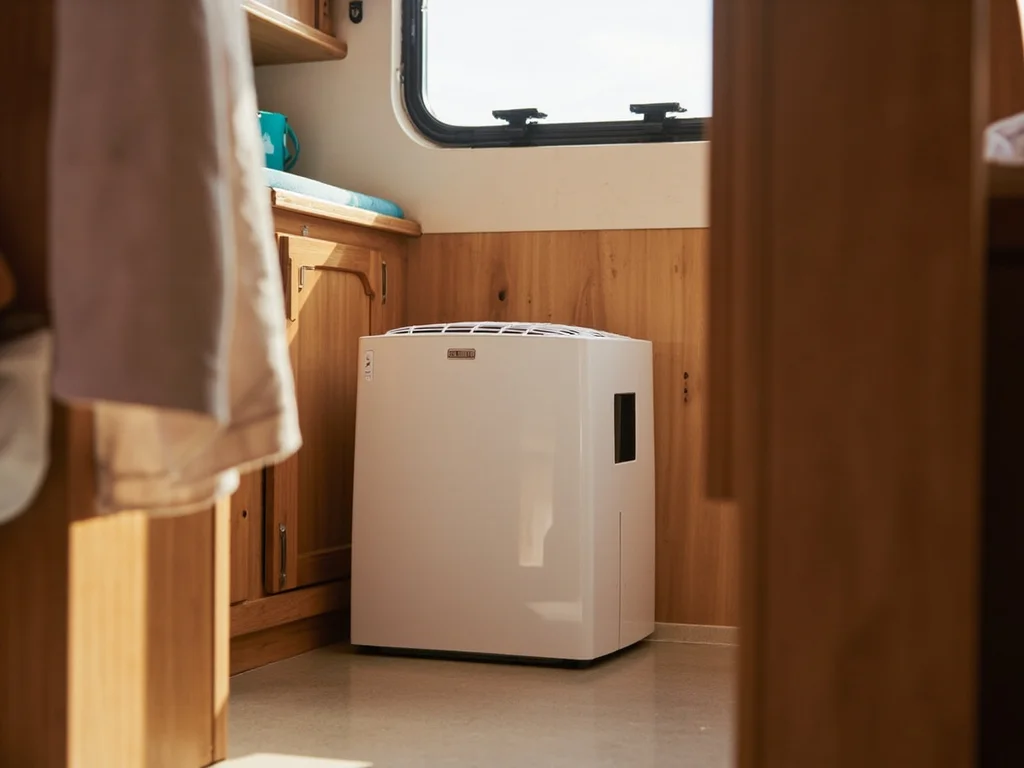
A small compact dehumidifier left running in a stored caravan prevents damp, mould and musty smells over winter.
Yes, if condensation and damp are the problem. Caravans are smaller than houses, often less insulated, and used seasonally which means moisture builds up quickly when the unit is occupied. A dehumidifier helps keep the interior dry between visits and reduces the risk of mould damaging soft furnishings, fabrics and woodwork.
It is less useful if there is water leaking in through the roof, walls or seams in that case, get the unit inspected and repaired first.
Start with the room and the symptom. Is the problem mainly condensation on windows and walls after a visit, a musty smell when you open up, visible mould in corners or behind furniture, or damp on stored items? The right product depends on the cause.
For ordinary condensation, a hygrometer is a useful first step measure the humidity before and after running a dehumidifier to check whether it is making a difference. For staining, soft walls, water drippage or tide marks, investigate the source of water first before buying equipment.
Caravans cool down quickly and moisture from cooking, showering and breathing condenses on cold surfaces. This is the most common damp cause in touring and static units.
Unheated caravans in winter can drop to near-zero inside. Standard dehumidifiers lose extraction capacity in the cold desiccant types handle this better.
Caravans are enclosed, compact spaces. You do not need a large industrial unit. A compact desiccant dehumidifier sized for the floor area is normally sufficient.
Think about when you use the caravan and how cold it gets. If you winterise the unit and only use it from spring to autumn, a low-temp compressor may work for you during visits. If you leave the caravan empty through winter, a desiccant unit can run on a low setting to protect the interior between visits.
For static caravans used as occasional holiday lets or weekend retreats, size it as you would a small flat but bear in mind the unit may be unheated between bookings, so desiccant is the safer bet for cold-season protection.
Standard compressor dehumidifiers work like a fridge they cool air to condense moisture. Below about 10C, they lose efficiency significantly and may struggle to extract moisture at all in an unheated winter caravan.
Desiccant dehumidifiers use a heated absorbent wheel instead. They work more effectively in cooler temperatures and can run on a low setting continuously without the same performance drop. This makes them better suited to seasonal caravan use where the unit sits empty in the cold.
If you only use your caravan in warmer months and keep it heated during visits, a low-temp compressor unit is a cheaper option but for year-round protection, go desiccant.
Most single touring caravans and static units up to 12 metres do well with a compact desiccant unit in the 58 litres-per-day range. Larger twin-unit touring caravans and static holiday lets need more capacity.
| Caravan Type | Suggested Capacity | Recommended Type |
|---|---|---|
| Small touring caravan (under 5m) | 58 litres/day | Compact desiccant |
| Standard touring caravan (57m) | 812 litres/day | Desiccant |
| Large touring / twin-unit | 1216 litres/day | Desiccant or low-temp compressor |
| Static holiday let / residential park home | 16+ litres/day | Desiccant, sized like a small flat |
Caravans have specific requirements: cold operation, size constraints, portability and the ability to run intermittently between visits.
| Type | Min operating temp | Cold performance | Size / portability | Typical price range |
|---|---|---|---|---|
| Desiccant | -10C and below | Good even in cold | Compact, lightweight | £120-£300 |
| Low-temp compressor | -5C approximate | Moderate below 10C | Moderate size | £100-£250 |
| Standard compressor | 5C minimum | Poor in unheated cold | Varies | £80-£180 |
| Peltier (thermo-electric) | 5C minimum | Very low extraction | Compact, cheap | 3060 |
Compact, lightweight, handles temperature swings.
Works in cold, small footprint
Compare on AmazonEnergy-conscious, portable
Compare on AmazonMoisture absorber, prevents damp
Compare on AmazonUse the dehumidifier size calculator and running cost calculator before choosing a model.
Type to search all DampHomeFix guides, tools and buying pages.