Capacity
Small rooms may only need compact units, while laundry drying, open-plan spaces and persistent damp usually need larger extraction capacity.
UK home moisture help
Garages are often colder than living rooms, so model type and operating temperature matter more than headline capacity.
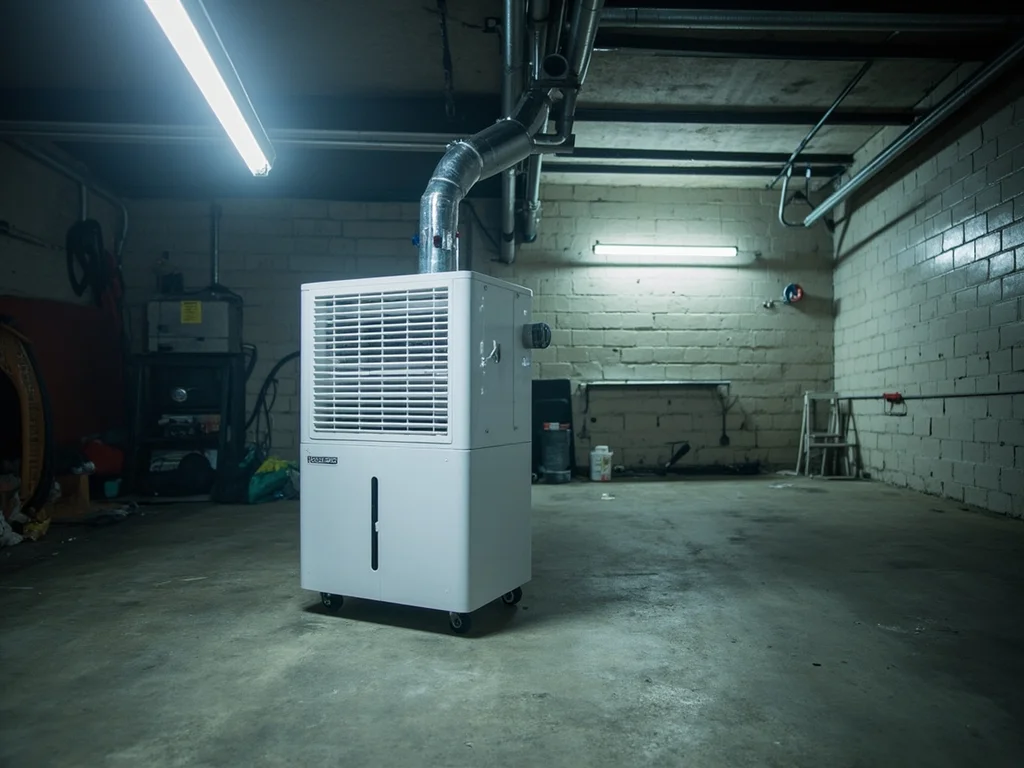
Garage Storage Damp
Garages need cold-space thinking because stored items, vehicles and low temperatures affect product choice.
Start with the room and the symptom. Is the problem mainly morning condensation, a musty smell, visible mould, slow laundry drying, or damp marks that suggest water ingress? The right product depends on the cause.
For ordinary condensation and high humidity, measuring the room with a hygrometer is a useful first step. For staining, leaks, crumbling plaster or tide marks, investigate the building issue rather than only buying a dehumidifier.
Small rooms may only need compact units, while laundry drying, open-plan spaces and persistent damp usually need larger extraction capacity.
Bedrooms and offices need quieter operation. Garages and utility areas can usually tolerate more noise if extraction performance is better.
Check wattage and likely hours of use. Use our running cost calculator before assuming a bigger unit is too expensive to run.
Start with the problem you are actually trying to solve. A dehumidifier for drying laundry every day has different priorities from a quiet unit for a bedroom or a machine for a colder garage. Think about the room temperature, how often moisture is created, whether you can drain continuously, and how easily you can empty the tank.
Do not buy only from the headline litres-per-day number. That figure is usually measured in favourable test conditions, and real UK homes are often cooler. Also check noise level, physical size, tank capacity, auto-restart, humidity target, laundry mode and warranty support.
If there are leaks, overflowing gutters, failed seals, damp patches after rain, tide marks, crumbling plaster or a persistent wet wall, investigate the source of water first. A dehumidifier can reduce airborne moisture, but it cannot repair building defects. For suspected structural damp, get appropriate professional advice before spending heavily on appliances.
For many homes, the best setup is a dehumidifier plus a cheap digital hygrometer, consistent ventilation habits and careful furniture placement away from cold external walls. Mould remover can clean existing staining, but moisture control is what helps stop it returning.
A garage is usually the coldest, least ventilated and most humid room on the property. It often has a single-skin wall, a concrete floor that holds moisture, a metal up-and-over door that condenses first, and no heating. Nothing in it dries out on its own between October and April. That has three consequences:
If the damp gets worse after rain, or you can see tide marks, crumbling plaster or a wet patch that never dries, that is water getting in rather than humidity. Deal with the water first - a dehumidifier will not hold back a leaking roof or a failed damp course.
| Spec | Why it matters in a garage | What to look for |
|---|---|---|
| Type | The decision that matters most | Desiccant for an unheated garage; compressor only if the space is heated or above about 15C |
| Operating temperature range | Determines whether it works in January | A stated minimum well below your coldest garage temperature |
| Auto-defrost | Stops the coil icing up and the unit shutting down | Essential for any compressor unit in a cold space |
| Extraction at low temperature | Headline figures are quoted at 30C | A stated low-temperature extraction figure if the maker publishes one |
| Continuous drainage | Nobody empties a tank in a garage every day | A hose outlet you can route indoors, or a large tank |
| Auto-restart | Garage circuits often share with freezers, or get switched off | Resumes after a power cut |
| Drain fittings | Cheap fittings split in cold weather | A screw-fit drain outlet rather than a push-on stub |
| Build and servicing | Dust, cold and condensation | Washable dust filter and sensible cable length |
Running cost is the rated power in kilowatts multiplied by the hours you run it, multiplied by your electricity unit rate. A desiccant unit - the right type for most unheated garages - typically draws 500-700 W, noticeably more than a compressor unit of similar extraction. Working on an assumed 25p per kWh and 4 hours a day:
Check your own tariff - the figure on your bill is the one that applies - and put your hours into the running cost calculator. If the monthly figure looks painful, the answer is usually to fix draughts and keep the door shut rather than to run the unit longer.
Desiccant models sold in the UK come from a smaller set of brands than compressor units. Meaco, EcoAir, Pro Breeze, De'Longhi and Inventor all list desiccant or low-temperature models, alongside specialist names aimed at garages, caravans and workshops. As elsewhere on this site, we do not rank or recommend specific models, because we have not tested them. Compare the stated operating temperature range, the low-temperature extraction figure and the drain fittings, in that order, and treat the badge as secondary.
If the problem appears mainly after sleeping, showering, cooking or drying laundry, it is often condensation-related and can usually be improved with humidity monitoring, ventilation habits and the right size dehumidifier. If the problem gets worse after rain, appears as localised staining, or stays wet even when the room is ventilated and heated, treat it as a possible repair issue first.
Garages and cold spaces have different requirements to living areas. Temperature range, extraction capacity for unheated spaces and corrosion resistance matter most.
| Type | Min operating temp | Extraction (cold) | Corrosion resistance | Typical price range |
|---|---|---|---|---|
| Desiccant | -10C and below | Good even in cold | High no compressor | £180-£350 |
| Low-temp compressor | -5C approximate | Moderate below 10C | Moderate | £150-£280 |
| Standard compressor | 5C minimum | Good above 15C | Moderate | £100-£200 |
| Industrial condenser | -15C rated | High | Very high industrial grade | £400-£800 |
Cold garages need the right type. Pick your situation. We do not rank or recommend individual models, because we have not tested them.
Desiccant type, works in low temps
Compare on AmazonCompressor type, 16-20L, energy efficient
Compare on AmazonSet and forget continuous drainage
Compare on AmazonUse the dehumidifier size calculator and running cost calculator before choosing a model.
Type to search all DampHomeFix guides, tools and buying pages.