Do not block vents
Air intake and outlet need open space.
UK damp and humidity guide
A dehumidifier works best when air can move freely through it. Put it in the wrong place and it may run for longer, collect less water, or dry the wrong part of the home.
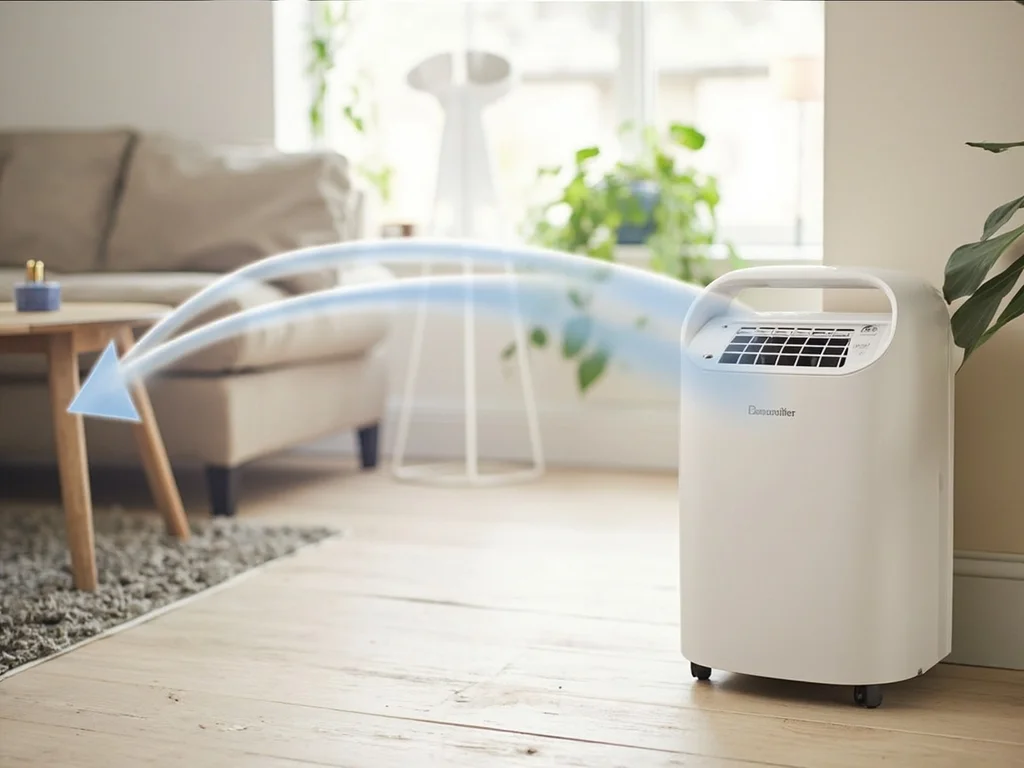
Dehumidifier Placement
Keep the intake and outlet clear so the machine can circulate room air properly.
Air intake and outlet need open space.
Laundry, bedroom and garage use cases differ.
Manufacturer clearance rules come first.
Place the unit on a flat surface, away from curtains, furniture and walls unless the manufacturer says otherwise. Do not cover it with clothes, towels or bedding.
Put the dehumidifier in the same room as the drying rack, with space around both. A closed door can help the unit focus on that room if safe and suitable.
Avoid placing the unit right beside the bed if noise or airflow will disturb sleep. Put it near the damp area or window side of the room, but not directly under a dripping window.
Most portable dehumidifiers are not designed to sit inside wet zones. Use the extractor fan first; a unit outside the bathroom can help with humidity that spills into nearby spaces.
Check the operating temperature. Cold garages may need a desiccant model or a unit rated for lower temperatures. Keep it away from sawdust, tools and direct water.
Compare current products, reviews and availability. We do not display live prices because those change frequently.
Use the size calculator, running cost calculator and damp checklist to compare the problem before spending money.
Type to search all DampHomeFix guides, tools and buying pages.