Spin first
Remove as much water as possible before clothes go on the rack.
UK damp and humidity guide
Drying clothes indoors is sometimes unavoidable in flats, rented homes, winter weather or homes without outdoor space. The trick is controlling where the moisture goes.
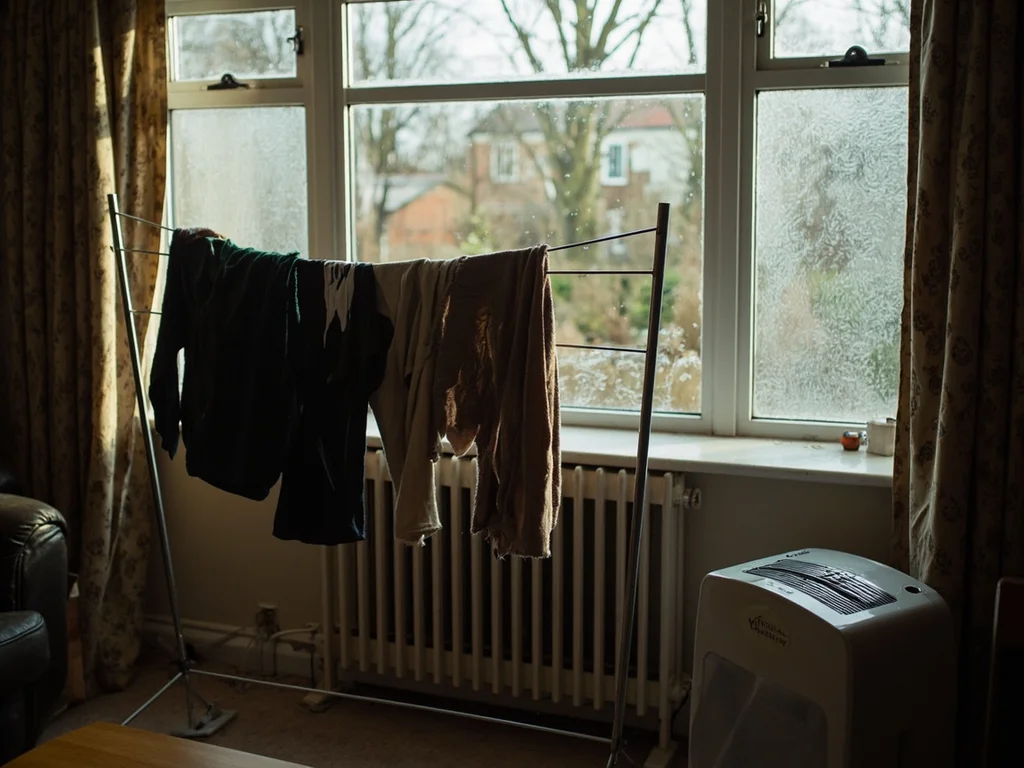
Indoor Clothes Drying
Spacing, airflow and moisture removal matter more than simply putting clothes near heat.
Remove as much water as possible before clothes go on the rack.
Air needs to reach fabric on both sides.
Look at windows, wardrobes and cold walls the next morning.
Use the warmest, best-ventilated room you can. Avoid small bedrooms with cold external walls if possible.
If you must use a bedroom, keep furniture slightly away from walls and monitor humidity.
Packed clothes dry slowly and keep the room humid for longer. Spin clothes well before hanging and leave gaps between items.
Airflow helps moisture leave fabric. Open a window briefly, use an extractor where available, or place the rack where air can move around it.
Place the dehumidifier near the drying rack, but do not block the air intake or outlet with clothes.
Close the room door if safe and suitable so the unit is not trying to dry the whole house.
A cheap humidity meter helps show whether laundry is causing a problem. If the room stays above 6065% for long periods, improve ventilation or extraction.
Compare current products, reviews and availability. We do not display live prices because those change frequently.
Use the size calculator, running cost calculator and damp checklist to compare the problem before spending money.
Type to search all DampHomeFix guides, tools and buying pages.