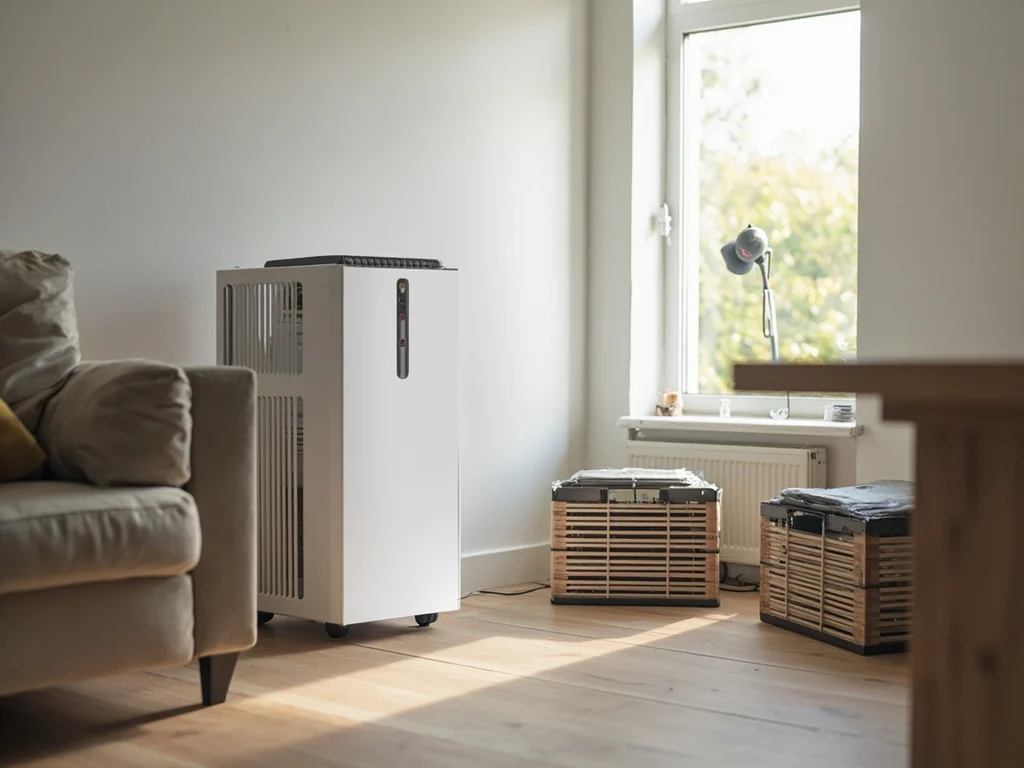
Can I use a dehumidifier in a rented property?
Yes. A dehumidifier is a portable household appliance, like a fan or heater. You do not need landlord permission to use one in most tenancies. You are responsible for running it and for the electricity it uses. You do not need to notify your landlord unless the tenancy agreement specifically requires it.
You should keep the unit and its power cable in good condition, and not leave it running unattended for extended periods when you are not in the property. Keep the receipt or order confirmation in case you need to demonstrate you purchased it as a reasonable step to address a damp problem.
Who is responsible for damp in a rented property?
This is one of the most common questions UK tenants ask, and the answer depends on the cause of the damp:
- Landlord responsibility: Damp caused by building defects a leaking roof, missing or failed damp-proof course, penetrating damp through walls, inadequate extractor fans or ventilation, or a water leak from an adjacent property is the landlord's responsibility to repair under the Homes (Fitness for Human Habitation) Act 2018.
- Tenant responsibility: Damp caused by tenant behaviour drying clothes indoors without ventilation, failing to use extractor fans, blocking air vents, leaving windows closed constantly in cold weather is the tenant's responsibility to manage.
- Shared responsibility: Some situations involve both. If a property has poor ventilation but the tenant also dries multiple loads of laundry indoors, both the landlord improving ventilation and the tenant changing habits are needed to solve the problem.
Can I withhold rent if my landlord refuses to fix damp?
Withholding rent is a serious step and should not be done without legal advice. It can breach your tenancy agreement and lead to eviction proceedings if done incorrectly. If you have a strong case confirmed by Citizens Advice or a solicitor you can withhold rent as a last resort, but you must follow the correct legal process.
The better first step is to contact your local council's environmental health team. They have powers to compel a landlord to address a damp problem that affects health or makes the property unfit. This is usually faster and more effective than direct negotiation with a reluctant landlord.
Best dehumidifier for a rented flat or house
A tenant needs a dehumidifier that is practical to move, energy-efficient for running costs, and effective in the UK climate. The same rules apply as for any UK home, with a few tenant-specific considerations:
- Size and weight: If you might move, choose a unit you can carry yourself. A compact desiccant dehumidifier of 812 litres/day is sufficient for most one- or two-bedroom rented properties.
- Noise: If the dehumidifier will run overnight in a bedroom, choose a quieter model. Desiccant units tend to be quieter than compressors at full load.
- Running costs: Check the wattage. A 300W unit running 8 hours per day costs around 1520 per month at the April 2026 UK electricity rate. Use our running cost calculator to budget.
- Continuous drainage: Useful for rented properties if you have a sink or floor drain nearby you can set it up and leave it running without emptying a tank between tenancies.