Insulation
Insulating walls and floors reduces cold surfaces where condensation forms. Solid wall insulation is a significant investment but particularly effective in older UK properties with single-skin brick walls.
UK condensation and damp guide
Moisture from daily life builds up in UK homes, causing condensation and mould. Here is how to check, control and reduce it.
UK guide
Ventilation and dehumidifiers work together. Start by airing out the house, then check if a dehumidifier keeps humidity in check.
UK homes are particularly prone to humidity problems. Our climate is damp, many homes are older with solid walls and single glazing, and we spend most of our time indoors with windows closed. Moisture from cooking, showering, breathing and laundry drying adds up throughout the day and when it meets cold surfaces like windows or external walls, it condenses into water droplets.
If this happens regularly, you will see black mould on walls and window frames, a musty smell, and peeling wallpaper or paint. High humidity also makes homes feel colder in winter because damp air takes more energy to heat. Keeping indoor humidity below 60% makes the home more comfortable and helps prevent mould from establishing.
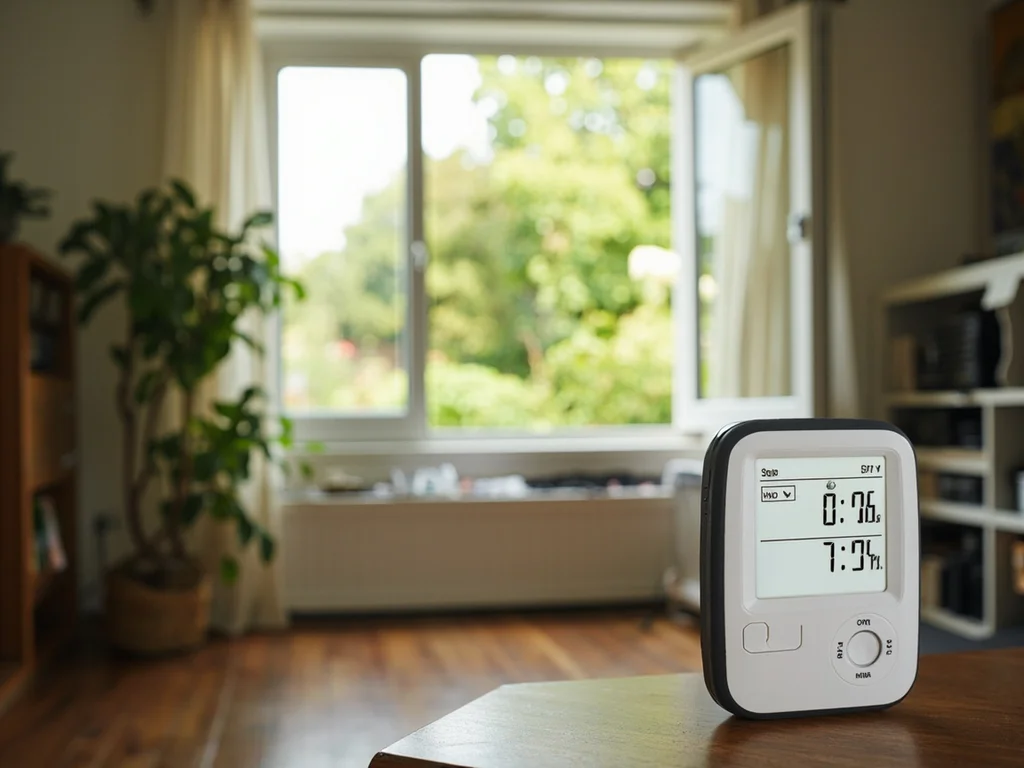
A digital hygrometer is the most reliable way to know your humidity level. These are available from Amazon UK for under 20 and give an immediate reading. Place one in the room you are most concerned about a bedroom, bathroom or living room and check it at different times of day.
UK homes should ideally sit between 40% and 60% relative humidity. Below 40% feels dry and can irritate skin and airways. Above 60% for extended periods creates conditions where dust mites and mould thrive. If your readings are consistently above 60%, you have a moisture problem worth addressing.
If you do not have a hygrometer, a clear sign of excess humidity is condensation on windows when it is cold outside. If you wipe the glass dry and it returns within an hour or two, humidity is too high.
Insulating walls and floors reduces cold surfaces where condensation forms. Solid wall insulation is a significant investment but particularly effective in older UK properties with single-skin brick walls.
Extractor fans, passive stack ventilation and positive input ventilation systems all help move humid air out of the building and bring in drier air from outside.
Keeping all rooms at a low background temperature (around 1517C) is better than heating one room to 22C while leaving others unheated. Cold spots on walls promote condensation.
A dehumidifier extracts moisture from the air and is effective for persistently humid homes where ventilation alone is not solving the problem. They are particularly useful in flats, mid-floor homes and properties with limited airflow.
If high humidity persists even after improving ventilation habits, or if you see the following signs, a dehumidifier alone will not fix it get professional advice:
These suggest penetrating damp (water entering through walls or roof), rising damp (ground moisture drawing up through floors and walls) or a plumbing leak. A building surveyor or damp specialist can identify the source and recommend remediation.
If you have tried ventilation and behaviour changes and humidity is still high, a dehumidifier can help. For whole-house control, the approach depends on your property type:
Use our dehumidifier size calculator to find the right capacity for your space, and check running costs with our running cost calculator.
Monitor, extract, ventilate. Pick your setup.
16-20L, whole-room moisture removal
Compare on AmazonTrack humidity in 2 rooms at once
Compare on AmazonBathroom/kitchen ventilation upgrade
Compare on AmazonUse the dehumidifier size calculator and running cost calculator before choosing a model.
Type to search all DampHomeFix guides, tools and buying pages.